How a Delhi High Court case works
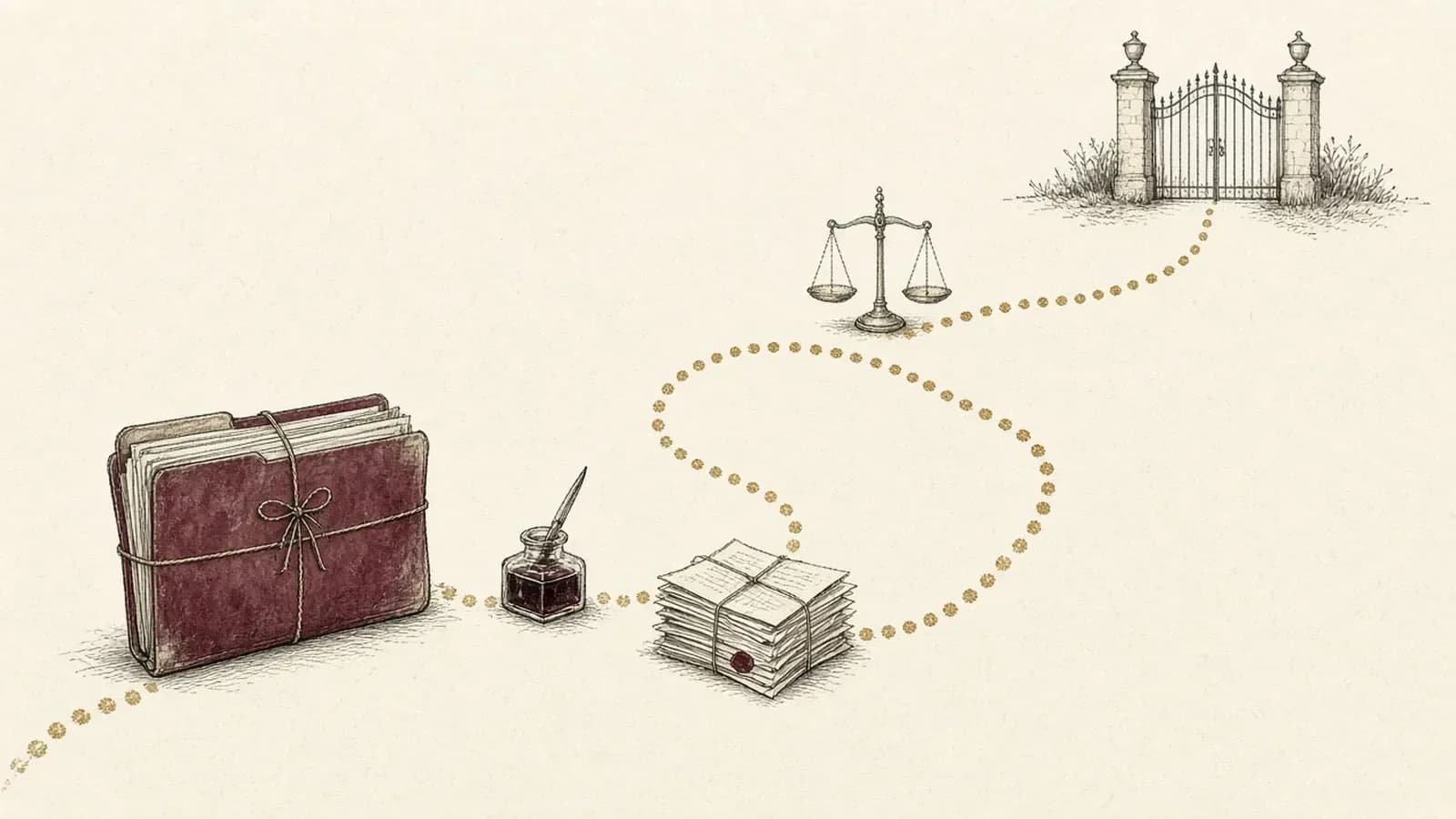
This guide answers 11 questions on how a Delhi High Court case works, from the diary number in hand to the signed order on the file.
Someone in a Delhi office is holding a printout with a long number and has been told the case is filed. The hearing, they have heard, is tomorrow. They cannot tell whether the number is the case, whether the board will call it, or whether an order already exists.
Nair & Co, Advocates & Consultants
New Delhi, India
How does a Delhi High Court case work?
The paper in the hand is a diary number. The board on the wall has not called it. How a Delhi High Court case works is the distance between those two facts. Lodging a petition gives the registry something to scrutinise. It does not give the party a hearing, a bench, or an order. The case becomes a case when defects, if any, are cleared and a case number is assigned, and it is heard when a bench reaches it on a list.
What is the difference between a diary number and a case number?
A diary number is the number the registry gives a fresh lodging, so that the bundle can be tracked while it is checked. A case number is the number of a matter that has been registered and can be listed. They are not aliases. Quoting the diary number to the other side as if the suit were already numbered overstates what has happened. The diary number is useful. It is how defects are cured and how the lodging is found.
What happens if the registry marks defects?
Electronic filing, in outline, is a sign-in, a choice of case type, the names of the parties, and an upload of the petition, the affidavit, and the annexures, with a vakalatnama where an advocate is acting. The registry then scrutinises the bundle. Defects are notified, and they are cured in the time the registry indicates. This note does not invent a number of days for that cure. Paper filing remains only where the current practice of the Court still permits it.
How is case status different from the cause list?
Case status is the record of what the file has done: filing, defects, registration, orders already passed. The cause list is the board for a particular day, showing what a bench is supposed to call. A matter can have a healthy case status and still not be on tomorrow's list. A matter can be on the list and still not be reached. Reading status as if it were the list, or the list as if it were a judgment, mixes two documents. The status answers where the file is.
What does it mean if the matter is not reached?
Not reached means the bench did not call the matter that day. It does not mean the case was dismissed, and it does not mean the other side won. The matter is ordinarily put to another date. A supplementary list can add matters after the main list is published, so a reader who looked only in the morning can miss a later addition. Assuming that absence from the first list is the end of the day is unsafe. Assuming that not reached is a judgment is worse.
Is the display board the same thing as an order?
The display board shows which item a court is on. It is a convenience for people in the corridor and people watching from an office. It is not an order. An order is the text a judge signs, which is then uploaded. What a lawyer remembers from the board, or what a client was told by telephone from the courtroom door, can be wrong in detail. The signed, uploaded order governs. Until that text is available, there is nothing to comply with and nothing to challenge, except whatever the Court pronounced and later reduced to writing.
How does the roster decide which bench hears the case?
The Chief Justice determines the roster. Benches hear the categories assigned to them, and a matter is listed before the bench that has the relevant category, not before whichever courtroom a party prefers. The roster changes. A case that was before one bench can move when the assignment moves. Parties do not choose the judge by addressing the petition to a name. They file in the Court, and the roster does the rest. Asking why a particular judge has the file is usually answered by the current roster, not by a theory about the dispute.
Where do commercial cases and intellectual property cases sit?
A commercial dispute of the specified value is heard by the Commercial Division, by roster. An intellectual property matter is heard by the Intellectual Property Division, again by roster. They are not a separate court in another city. They are assignments inside this Court. The note Commercial disputes and arbitration in the Delhi High Court describes the commercial route. The note IP and trademark litigation in the Delhi High Court describes the comparison of rights. Neither note changes the diary number, the defects, or the cause list.
What is the ordinary path of a notice and a reply?
Once a matter is before a bench, the ordinary path is notice to the other side, time to answer, and then a hearing. Interim relief can be asked for along the way, and it can be refused. The time to answer is the time the Court gives or the rules state. This note does not invent a universal number of days for every kind of case. A commercial suit has its own outer limit for a written statement, described in the commercial note. A writ has its own urgency.
Does an interim order decide the case?
An interim order holds a position until the case is decided. It is not the decision. An injunction, a stay, or a direction to file a reply does not declare who is right on the merits, even if it feels that way to the party who obtained it or to the party who suffered it. The final judgment is a different order, made after the pleadings and, where the kind of case requires it, the evidence. Treating the interim order as the end of the dispute leads people to stop preparing the case they have not yet won or lost.
What should be checked the day before a hearing?
Check the case number, not only the diary number. Check the cause list for that date, and check again for a supplementary list. Check which bench the roster has assigned, and check whether an earlier order uploaded something the memory of the last hearing has blurred. Check that defects, if they were marked, were actually removed. Arrive at the courtroom the list names, not the courtroom that heard the case last year. The paper in the hand is still only a diary number if that is all it is.
In short
A diary number is not a hearing, a display board is not an order, and not reached is not a dismissal. The signed order is the case. This note is published by [Nair & Co, Advocates & Consultants](/) in New Delhi, as information only.
Other notes
- Commercial disputes and arbitration in the Delhi High Court
- Writ petitions against regulators and government in the Delhi High Court
- Company and corporate disputes in the Delhi High Court
- NRI property and succession matters in Delhi
- IP and trademark litigation in the Delhi High Court
- White-collar bail and anticipatory bail in the Delhi High Court
- Supreme Court SLPs from Delhi High Court orders
- Delhi High Court lawyer: choosing and working with counsel
Bar Council of India
This note is published from New Delhi, India, for information only. It is not legal advice, and it is not a solicitation or an advertisement.
Reading it does not create an advocate-client relationship. Under the rules of the Bar Council of India, an advocate shall not solicit work or advertise.
Procedure and the law change. A court decides each matter on its own record. Nothing on this page is an offer to act.